
Why Kybernáō
From steering ships to studying how organizations are steered.

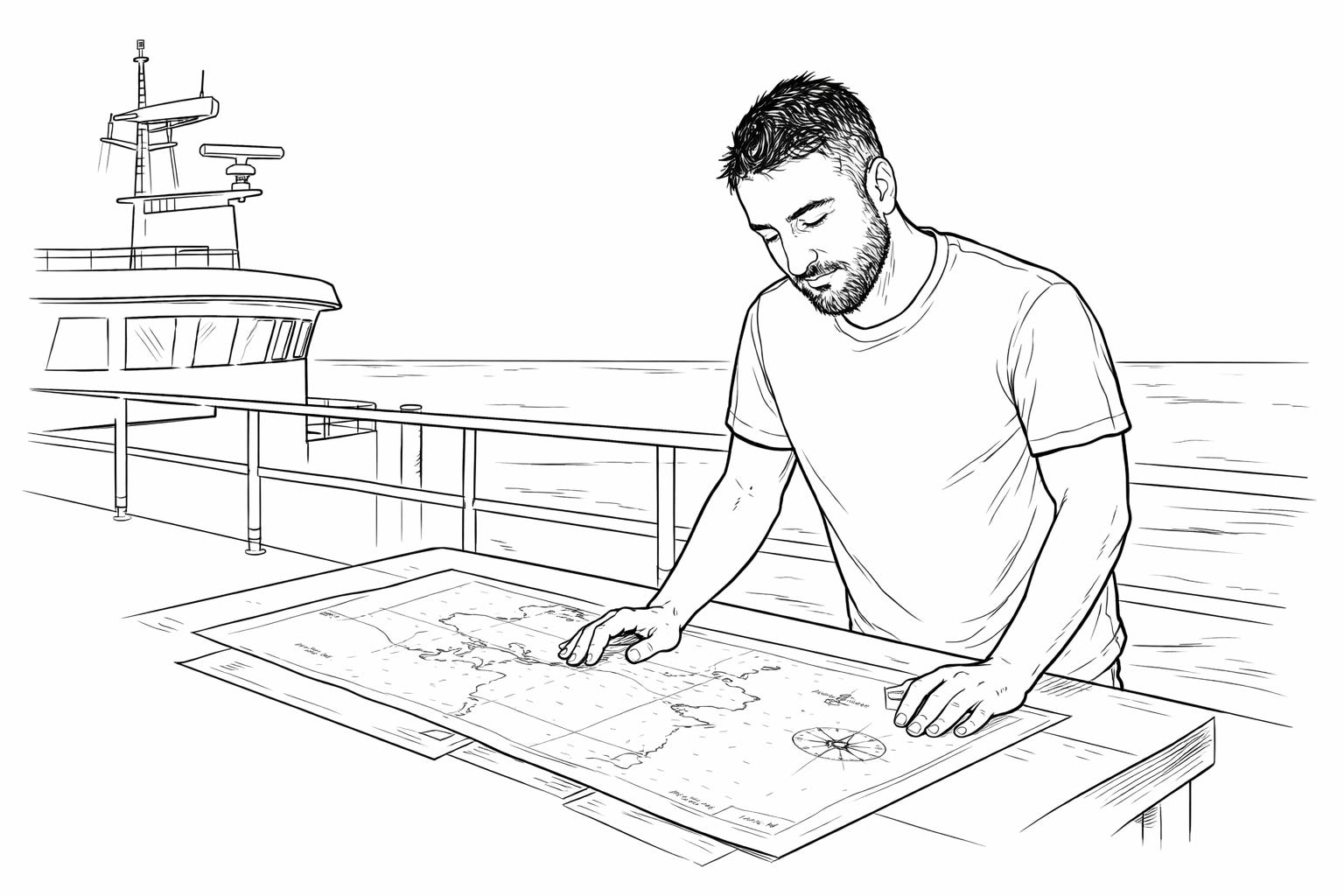
Before working in DAOs, grants, and digital governance, I studied nautical engineering and worked at sea.
A ship is a complex system.
It needs a destination, a crew, a chain of responsibility, limited resources, reliable information, and procedures for when something goes wrong. Conditions constantly change. Plans must be adjusted. Someone has to decide when to stay the course and when to turn.
Organizations and communities are not so different.
They also need to decide where they are going, who has authority, how resources are allocated, how conflicts are resolved, and how to correct course when reality no longer matches the original plan.
That is what governance is.
Not just voting.
Not just constitutions, proposals, or forums.
Governance is the wider system through which people coordinate direction, power, resources, responsibilities, and accountability.
From The Good Contributor to Kybernáō
Some of you originally subscribed to The Good Contributor, a publication about contributing to DAOs and digital organizations.
That publication emerged during an earlier stage of my work. I was learning how decentralized organizations operated, how contributors found opportunities, and how people could build careers within these new systems.
Since then, my work has expanded.
I have worked on DAO governance, delegated voting, grant programs, proposal analysis, institutional documentation, ecosystem research, and capital allocation.
I have seen communities approve proposals that were never properly implemented.
I have seen grant programs distribute large amounts of money without clearly defining what success meant.
I have seen governance systems designed around participation while making participation exhausting.
I have seen organizations preserve every vote while losing the context needed to understand why a decision was made.
And I have seen promising communities struggle because nobody was clearly responsible for turning collective intentions into action.
These are not isolated DAO problems.
They are institutional problems.
The same questions appear in foundations, online communities, cooperatives, artificial intelligence projects, startup cities, intentional communities, and other experiments in coordination.
That is why this publication is becoming something broader.
What does Kybernáō mean?
Kybernáō comes from the Greek idea of steering, piloting, or governing.
It is connected to the image of holding a helm: observing the environment, choosing a direction, coordinating people, and continuously correcting course.
The metaphor describes the questions I want to investigate:
Who holds the helm?
Who chose the destination?
Who controls the resources?
What information reaches the decision-makers?
What happens when the crew disagrees?
Who is accountable when the system moves in the wrong direction?
Can the institution learn and correct course?
These questions apply to a ship, but also to a DAO, a grant program, a community, or a city.
What Kybernáō will cover
Kybernáō will study how emerging institutions actually work.
The publication will begin from my existing experience in:
DAO governance
Grants and capital allocation
Delegation and representation
Institutional research
Ecosystem and stakeholder mapping
Coordination and accountability
But it will also explore adjacent experiments:
Startup cities and emerging communities
Digital institutions and network societies
AI-assisted governance and deliberation
New models of ownership and collective decision-making
Research on coordination, institutional design, and collective intelligence
A paper about AI-mediated deliberation may help us understand how a large DAO could process disagreement.
A case study about a startup city may reveal who actually controls a supposedly self-governing community.
A failed grant program may teach us more about accountability than another theoretical governance framework.
The subjects may appear different, but the underlying problem is the same:
How do groups of people choose direction and turn collective intentions into reality?
What each issue should provide
I do not want Kybernáō to become a stream of abstract commentary or summaries generated from academic papers.
Each issue should offer at least one of the following:
A clear explanation of a complex governance problem
A real-world case study
A useful framework or institutional lesson
A map of relevant actors, capital, or opportunities
A critical examination of a new project or model
Practical recommendations for people building or governing institutions
Research matters, but only when it helps us see reality more clearly.
The goal is not simply to describe new systems.
It is to understand who benefits from them, where they are fragile, what they could become, and how they might be improved.
The course ahead
I expect to publish approximately twice a month while the publication develops its rhythm.
Some editions will be deep research essays. Others will be shorter field notes, project analyses, conversations, or maps of opportunities.
The first subjects will likely include DAO governance, grant systems, artificial intelligence and deliberation, and the emerging world of startup cities and intentional communities.
Kybernáō is not a rejection of The Good Contributor.
It is the next stage of the same journey.
The original question was:
How can someone contribute meaningfully to a new organization?
The larger question is now:
How should these organizations and communities be steered in the first place?
Welcome aboard.
— Kaf
You are receiving this because you previously subscribed to The Good Contributor or directly joined Kybernáō. The publication has evolved, but remains connected to governance, digital organizations, and emerging institutions. You can unsubscribe at any time if this new direction is not relevant to you.